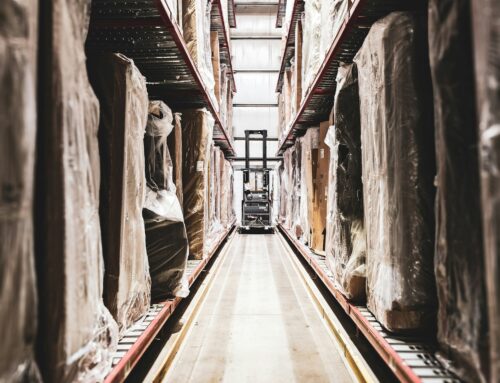
In today’s fast-paced marketplace, the efficiency of your supply chain can make or break your business. Enter the national distribution warehouse, a game-changer designed to streamline operations and enhance productivity. By centralizing storage and optimizing inventory management, these warehouses unlock unprecedented levels of organization and speed, transforming the way products move from supplier to consumer. Imagine cutting down lead times while boosting reliability—this is not just a dream but a reality enabled by strategic distribution centers. As we delve deeper into how national distribution warehouses revolutionize logistics frameworks, you’ll uncover the keys to driving efficiency, reducing costs, and ultimately achieving supply chain success. Whether you’re a small business or a large enterprise, understanding the pivotal role these facilities play is essential for staying competitive in an ever-evolving landscape. Join us as we explore the transformative power of efficient distribution and its lasting impact on your operations.
The Role of Distribution Warehouses in Supply Chain Management
Distribution warehouses play a pivotal role in the intricate web of supply chain management. These facilities act as centralized hubs where products from various suppliers are received, stored, and then dispatched to different destinations. This centralization not only streamlines the flow of goods but also ensures that inventory management is conducted more efficiently. By consolidating products in a single location, businesses can better predict demand, reduce excess stock, and minimize storage costs. Additionally, having a national distribution warehouse allows companies to implement more robust tracking and monitoring systems, ensuring that products are always where they need to be.
Moreover, distribution warehouses facilitate the seamless coordination between various stakeholders in the supply chain. From manufacturers and suppliers to retailers and end consumers, these warehouses ensure that each link in the chain is well-connected and informed. This interconnectedness is crucial in today’s fast-paced marketplace, where the slightest delay can result in significant financial losses. By acting as intermediaries, distribution warehouses help to bridge gaps, mitigate risks, and ensure that products are delivered on time and in perfect condition.
Furthermore, the strategic placement of distribution warehouses can significantly enhance a company’s ability to respond to market demands swiftly. Whether it’s a sudden spike in product demand or an unforeseen supply chain disruption, having a well-located warehouse ensures that businesses can adapt quickly and efficiently. This agility is paramount in maintaining a competitive edge and ensuring customer satisfaction. In essence, distribution warehouses are the backbone of modern supply chain management, providing the infrastructure necessary for smooth and efficient operations.
Key Benefits of Using a National Distribution Warehouse
The implementation of a national distribution warehouse offers numerous benefits that can transform the operational efficiency of a business. One of the most significant advantages is the reduction in lead times. By centralizing inventory in a strategically located warehouse, businesses can ensure quicker delivery times to various regions. This not only enhances customer satisfaction but also reduces the overall transportation costs. Faster delivery times mean that businesses can meet consumer demands more effectively, leading to increased sales and customer loyalty.
Another key benefit is the optimization of inventory management. With a national distribution warehouse, businesses can maintain a more accurate and real-time view of their inventory levels. This visibility allows for better forecasting and planning, reducing the risk of stockouts or overstocking. Efficient inventory management means that businesses can allocate resources more effectively, reducing waste and improving overall profitability. Additionally, a centralized warehouse can implement sophisticated inventory tracking systems, ensuring that products are always accounted for and reducing the likelihood of theft or loss.
Cost savings are another significant advantage of using a national distribution warehouse. By consolidating storage and distribution functions in one location, businesses can achieve economies of scale. Bulk purchasing and centralized storage reduce per-unit costs, leading to substantial savings. Furthermore, having a single distribution hub reduces the complexity and costs associated with managing multiple storage locations. These cost savings can then be passed on to consumers in the form of lower prices, further enhancing a company’s competitive position in the market. In summary, the benefits of a national distribution warehouse extend beyond mere logistics, impacting every facet of a business’s operations.
How Distribution Warehouses Enhance Inventory Management
Inventory management is a critical aspect of any business, and distribution warehouses play a vital role in enhancing this process. One of the primary ways they achieve this is through the implementation of advanced inventory tracking systems. These systems use technologies such as barcoding, RFID, and IoT sensors to provide real-time data on inventory levels, locations, and movements. This real-time visibility allows businesses to make informed decisions quickly, ensuring that they always have the right amount of stock on hand to meet demand.
Furthermore, distribution warehouses enable better demand forecasting and planning. By centralizing inventory, businesses can analyze data more effectively, identifying trends and patterns that can inform future stock requirements. This predictive capability reduces the risk of stockouts and overstocking, ensuring that resources are used efficiently. Better demand forecasting also means that businesses can respond more swiftly to changes in market conditions, maintaining a competitive edge and ensuring customer satisfaction.
Distribution warehouses also facilitate more efficient order fulfillment processes. With centralized inventory, businesses can implement streamlined picking, packing, and shipping procedures that reduce lead times and enhance accuracy. Automation technologies such as automated guided vehicles (AGVs) and robotic picking systems further enhance these processes, ensuring that orders are fulfilled quickly and accurately. Efficient order fulfillment not only improves customer satisfaction but also reduces operational costs, contributing to overall business success. In essence, distribution warehouses are crucial in optimizing inventory management, ensuring that businesses can meet demand efficiently and effectively.
Technology and Automation in Modern Distribution Warehouses
The advent of technology and automation has revolutionized the way distribution warehouses operate, driving efficiency and accuracy to unprecedented levels. One of the most significant technological advancements in this realm is the use of Warehouse Management Systems (WMS). These systems provide a comprehensive solution for managing all aspects of warehouse operations, from inventory tracking and order fulfillment to labor management and shipping. By integrating WMS with other enterprise systems, businesses can achieve end-to-end visibility and control over their supply chain operations, ensuring seamless coordination and execution.
Automation technologies have also transformed the physical operations within distribution warehouses. Automated storage and retrieval systems (AS/RS) use robotics to handle the storage and retrieval of products, reducing the need for manual labor and minimizing the risk of errors. These systems can operate around the clock, significantly increasing throughput and efficiency. Similarly, automated guided vehicles (AGVs) and autonomous mobile robots (AMRs) are used to transport goods within the warehouse, optimizing the flow of materials and reducing lead times.
Another critical technological advancement is the use of advanced data analytics and artificial intelligence (AI). These technologies enable businesses to analyze vast amounts of data to identify patterns, predict demand, and optimize inventory levels. AI-driven algorithms can also enhance decision-making processes, providing insights that help businesses improve their operations continuously. For example, predictive analytics can be used to forecast future demand, allowing businesses to adjust their inventory levels proactively. In summary, technology and automation are at the heart of modern distribution warehouses, driving efficiency, accuracy, and scalability.
The Impact of Location on Supply Chain Efficiency
The strategic location of a distribution warehouse is a critical factor that significantly impacts supply chain efficiency. A well-located warehouse ensures that products can be delivered quickly and cost-effectively to various regions, reducing lead times and transportation costs. This is particularly important in today’s fast-paced market, where customers expect rapid delivery times. By placing warehouses near major transportation hubs such as airports, seaports, and highways, businesses can ensure that products move swiftly through the supply chain, enhancing overall efficiency and customer satisfaction.
The location of a distribution warehouse also affects the ability to respond to market demands and disruptions. For example, a warehouse located in a central region can serve multiple markets more effectively, ensuring that products are always available when needed. This agility is crucial in maintaining a competitive edge and ensuring that businesses can adapt quickly to changes in market conditions. Additionally, a strategically located warehouse can act as a buffer during supply chain disruptions, ensuring that products are still available even when there are delays or issues in other parts of the supply chain.
Furthermore, the location of a distribution warehouse can impact the overall cost structure of a business. Transportation costs are a significant component of supply chain expenses, and a well-located warehouse can help to minimize these costs. By reducing the distance products need to travel, businesses can achieve substantial savings in fuel, labor, and other transportation-related expenses. These savings can then be passed on to consumers in the form of lower prices, further enhancing a company’s competitive position in the market. In essence, the strategic placement of distribution warehouses is a critical factor in driving supply chain efficiency and overall business success.
Case Studies: Successful Implementation of Distribution Warehouses
The transformative impact of distribution warehouses can be best understood through real-world case studies that highlight their successful implementation. One notable example is Amazon, the global e-commerce giant, which has revolutionized its supply chain through the strategic use of distribution warehouses. Amazon’s vast network of fulfillment centers enables it to deliver products rapidly to customers around the world. By strategically placing these centers near major cities and transportation hubs, Amazon has significantly reduced lead times and enhanced customer satisfaction. The company’s use of advanced technology and automation within these warehouses has further optimized operations, ensuring that orders are fulfilled quickly and accurately.
Another compelling case study is that of Walmart, one of the largest retail chains in the world. Walmart’s distribution network is a critical component of its supply chain strategy, enabling the company to maintain low prices and high availability of products. By strategically locating its distribution centers across the United States, Walmart ensures that products are always available in its stores, reducing the risk of stockouts. The company’s use of technology and advanced inventory management systems within these warehouses has further enhanced efficiency, ensuring that products move seamlessly through the supply chain.
A third example is the implementation of a national distribution warehouse by the cosmetics company Sephora. Faced with the challenge of managing a vast and diverse product range, Sephora established a centralized distribution center to streamline its supply chain operations. This strategic move has enabled the company to maintain better control over inventory levels, reduce lead times, and enhance the accuracy of order fulfillment. The use of automation and advanced inventory tracking systems within the distribution center has further optimized operations, ensuring that products are always available to meet customer demand. These case studies illustrate the transformative power of distribution warehouses in driving supply chain efficiency and overall business success.
Challenges Faced by National Distribution Warehouses
Despite the numerous benefits of national distribution warehouses, there are several challenges that businesses must navigate to ensure successful implementation and operation. One of the primary challenges is the significant capital investment required to establish and maintain these facilities. The costs associated with purchasing land, constructing the warehouse, and investing in advanced technology and automation systems can be substantial. Additionally, ongoing operational costs, such as labor, utilities, and maintenance, add to the financial burden. Businesses must carefully evaluate the return on investment and ensure that the benefits outweigh the costs.
Another challenge is the complexity of managing a centralized distribution warehouse. The scale and scope of operations within these facilities require sophisticated management systems and skilled personnel. Ensuring that all processes, from inventory management and order fulfillment to shipping and logistics, are optimized and integrated can be a daunting task. Additionally, maintaining real-time visibility and control over inventory levels and movements is crucial to prevent disruptions and ensure efficiency. Businesses must invest in robust management systems and training programs to equip their staff with the necessary skills and knowledge.
The dynamic nature of the market and supply chain disruptions pose another significant challenge for national distribution warehouses. Factors such as fluctuating demand, geopolitical events, natural disasters, and pandemics can impact the smooth operation of the supply chain. Businesses must develop contingency plans and build resilience into their supply chain operations to mitigate these risks. This may involve diversifying suppliers, establishing backup distribution centers, and investing in advanced forecasting and risk management systems. In summary, while national distribution warehouses offer numerous benefits, businesses must navigate several challenges to ensure their successful implementation and operation.
Future Trends in Distribution Warehousing and Supply Chain
The future of distribution warehousing and supply chain management is poised to be shaped by several emerging trends and technological advancements. One of the most significant trends is the increased adoption of automation and robotics. As businesses seek to enhance efficiency and reduce labor costs, the use of automated systems such as robotic picking, autonomous mobile robots (AMRs), and automated guided vehicles (AGVs) is expected to become more widespread. These technologies not only improve the speed and accuracy of warehouse operations but also enable warehouses to operate around the clock, significantly increasing throughput.
Another emerging trend is the use of advanced data analytics and artificial intelligence (AI) to optimize supply chain operations. Businesses are increasingly leveraging big data and AI-driven algorithms to gain insights into demand patterns, optimize inventory levels, and enhance decision-making processes. Predictive analytics, for example, can help businesses forecast future demand more accurately, allowing them to adjust their inventory levels proactively. AI-driven optimization algorithms can also enhance routing and transportation planning, reducing lead times and costs.
Sustainability is also expected to play a more prominent role in the future of distribution warehousing and supply chain management. As consumers and regulators place greater emphasis on environmental responsibility, businesses are increasingly adopting sustainable practices within their supply chain operations. This may involve the use of energy-efficient technologies, the implementation of green logistics practices, and the adoption of circular economy principles. By reducing their environmental footprint, businesses can enhance their brand reputation and meet the growing demand for sustainable products and services. In essence, the future of distribution warehousing and supply chain management will be shaped by the increased adoption of automation, advanced data analytics, and sustainability practices.
Conclusion: Maximizing Supply Chain Success through Distribution Warehouses
In conclusion, the strategic implementation of national distribution warehouses is a game-changer in the realm of supply chain management. These facilities play a pivotal role in enhancing inventory management, reducing lead times, and optimizing order fulfillment processes. By centralizing storage and distribution functions, businesses can achieve significant cost savings, improve operational efficiency, and enhance customer satisfaction. The use of advanced technology and automation within these warehouses further drives efficiency and accuracy, ensuring that products move seamlessly through the supply chain.
However, businesses must navigate several challenges to ensure the successful implementation and operation of national distribution warehouses. Significant capital investment, complex management requirements, and the dynamic nature of the market are some of the key challenges that must be addressed. By investing in robust management systems, training programs, and contingency plans, businesses can mitigate these risks and ensure the smooth operation of their distribution warehouses.
Looking ahead, the future of distribution warehousing and supply chain management will be shaped by several emerging trends, including increased automation, advanced data analytics, and sustainability practices. By staying abreast of these trends and continuously innovating their operations, businesses can maintain a competitive edge and achieve long-term success. Ultimately, the strategic use of national distribution warehouses is essential for driving supply chain efficiency, reducing costs, and ensuring overall business success. Whether you are a small business or a large enterprise, understanding the pivotal role of these facilities is crucial for staying competitive in an ever-evolving marketplace.